

Burning bush
Burning bush at Meltzer Woods, pre-treatment
Don’t unwittingly spawn invaders
Written By: Cliff Chapman
Date Published: September 9, 2013
Cliff Chapman
by Cliff Chapman
Executive Director, Central Indiana Land Trust
You probably don’t notice it when you walk into your office building or drive by the bank. The landscaping looks nice, so you don’t pay attention to it. Throughout central Indiana, though, developers and landscapers are using plants that are inexpensive and look good, but plants like burning bush and Japanese barberry are destroying our native habitats and hurting land and water quality.
It’s not intentional; it’s simply a lack of awareness. For that reason, I’m appealing to developers and landowners to stop using these plants and choose native alternatives.
These invasives and others such as callery pear trees, Asian bush honeysuckle and privet are crowding out plants that help keep soil in place, which causes erosion that fills in our rivers and lakes. Some have stronger branches than native plants, making it easier for predators to attack bird nests, thus eliminating wildlife that people using your properties enjoy. Such negative environmental factors hurt our region’s ability to attract economic development.
If you question how something planted in a commercial development can affect nature far away, think again. Plants have a remarkable capacity to spread. We’ve seen countless examples of invasives in protected nature preserves and pristine old-growth forests … places where nobody intentionally planted them.
That’s why we need to work together to stop them.
Most of us have seen one of the nation’s most compelling examples of this problem: kudzu, which has devoured large portions of land in the Southeast. Introduced as a means of erosion control, kudzu has become a menace, spreading at an estimated rate of 150,000 acres a year, killing whole trees and large areas of vegetation by choking out sunlight.
In Indiana, the public has become increasingly aware of Asian bush honeysuckle and garlic mustard, which have taken over large swaths of land. Hundreds of volunteers have helped remove these plants, painstakingly cutting and pulling out those invaders so native plants can grow. We’re making headway, but these invasive plants continue to grow all across the state.
The good news is, developers no longer plant or buy Asian bush honeysuckle (garlic mustard was a garden plant that escaped).
That’s not the case, though, with other invasives including Japanese barberry, burning bush and purple winter creeper, as well as privet and Callery pear (including the Bradford pear). Those invasive plants still are sold at area stores and are popular among landscapers.
So, what can you do? First and foremost, when you’re planting, choose plants other than privet, burning bush, purple winter creeper, Japanese barberry and Callery/Bradford pear. If you have those plants, replace them with non-invasives.
There is no magic bullet, but by working together, we can get these invaders under control and make our landscape more environmentally stable and more attractive to the community.
From IBJ Opinion – August 24, 2013

Ben Valentine
Guest Blogger
Ben Valentine is a founding member of the Friends of Marott Woods Nature Preserve and is active in several other conservation organizations. He leads a series of NUVO interviews with Indiana's environmental leaders, and he cherishes showing his son all the wonders of nature he grew up loving.

DJ Connors
Guest Blogger
DJ Connors, a Central Indiana native and late-to-life hunter, combines a lifelong appreciation for wildlife and the outdoors with a deep passion for exploring the natural beauty of the area he has called home for most of his life. As a husband and father of three, he is committed to ensuring his children have the same opportunities to connect with nature and appreciate the outdoors in their community. DJ’s unique journey into hunting emphasizes sustainability, responsible stewardship, and the importance of preserving these experiences for future generations.

Bridget Walls
Guest Blogger
Bridget is our first ever Communications and Outreach Intern. She is a graduate of Marian University, where she combined English, studio art, and environmental sciences in her degree studies. As treasurer for Just Earth, the university's environmental club, she helped plan events encouraging a responsible relationship between people, nature, and animals.

Jordan England
Guest Blogger
Jordan England is a lifelong Shelby County resident who graduated from Waldron Jr. Sr. High School (just a few miles from Meltzer Woods!). After earning her B.S. degree in Retail Management from Purdue University, she returned to Waldron to start a family with her husband, Brian. Together they have 3 young children and enjoy sharing with them their love of the community. Jordan is the Grants and Nonprofit Relations Director at Blue River Community Foundation, managing BRCF’s grant program, providing support to local nonprofits, and promoting catalytic philanthropy in Shelby County.

Cliff Chapman
President and CEO
As CILTI’s President and CEO, Cliff keeps CILTI’s focus on good science and stewardship. He’s mindful that the natural places you love took thousands of years to evolve and could be destroyed in a single day, and that knowledge drives his dedication to their protection.
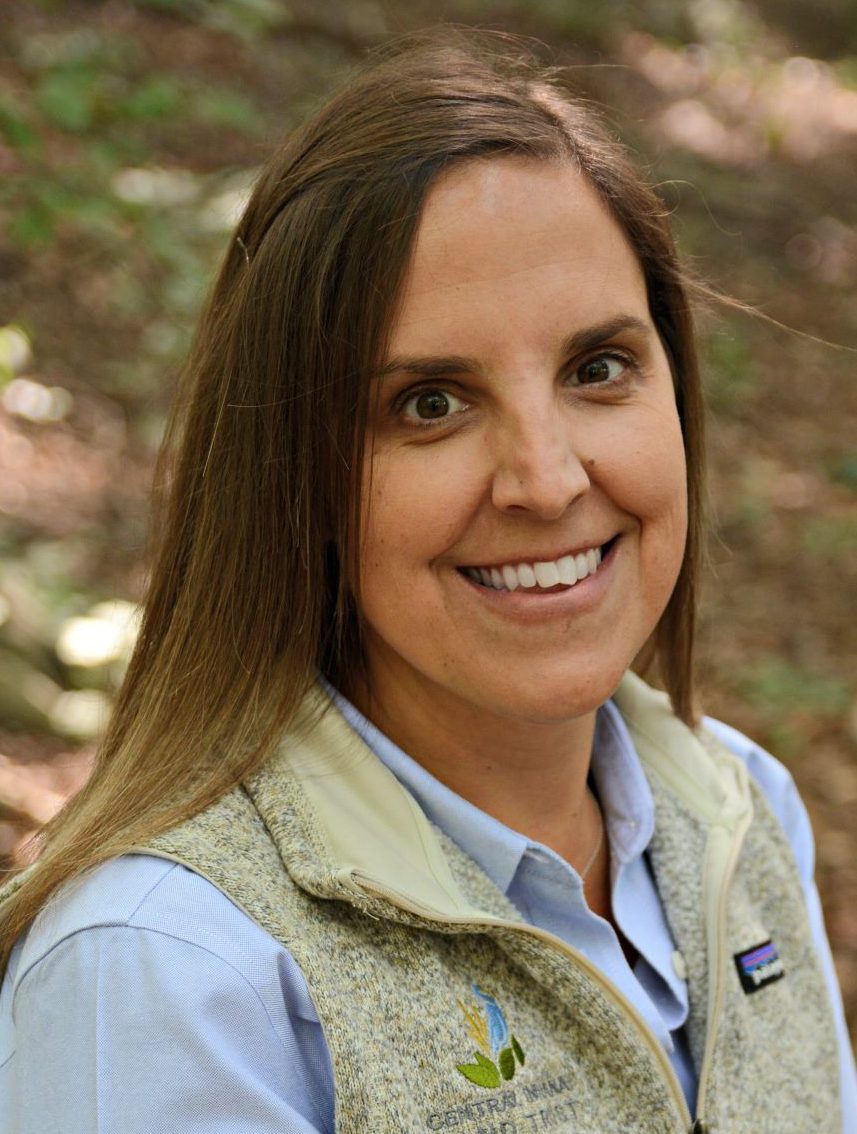
Stacy Cachules
Chief Operating Officer
Among her many key duties as Assistant Director, Stacy has the critical task of tracking our budget, making sure we channel donations for maximum efficiency. When her workday’s done, Stacy loves to spend time with her two young boys—and when not traveling, she’s likely planning the next travel adventure.

Ryan Fuhrmann
Board Chair
Ryan C. Fuhrmann, CFA, is President and founder of Fuhrmann Capital LLC, an Indiana-based investment management firm focused on portfolio management. Ryan’s interest in land conservation centers around a desire to help preserve natural habitats for wildlife and the subsequent benefits it brings to people and the environment.

Joanna Nixon
Board Member
Joanna Nixon is the owner of Nixon Consulting, an Indianapolis-based strategy and project management firm focused on the nonprofit sector. She currently serves as the Philanthropic Advisor for the Efroymson Family Fund. Prior to opening her consulting practice in 2000, Joanna was vice-president for grantmaking at Central Indiana Community Foundation (CICF). Joanna has more than 25 years of experience in the nonprofit and arts and culture sector. She is passionate about the environment and loves bringing big ideas to life and creating high-quality arts and culture programs and experiences. Joanna enjoys outdoor adventures, including competing in fitness obstacle course races and hiking with her high energy Australian Cattle Dog, Jackson.

Karen Wade
Board Member
Before retiring, CILTI board member Karen Wade worked for Eli Lilly & Co. In retirement she volunteers for a number of organizations, including the Indiana Master Naturalist program, Johnson County Native Plant Partnership CISMA, Meadowstone Therapeutic Riding Center, and Leadership Johnson County.

David Barickman
Development Director
Born and raised in Central Illinois, David spent many days as a child wandering around the river, forest and lakes there. He works behind the scenes as a key member of our fundraising team. When not working, David loves to be outdoors hiking, fly fishing, kayaking or woodworking.

Jamison Hutchins
Stewardship Director
Jamison leads our stewardship team in caring for the land that is so important to you. He comes to our team after eight years as Bicycle and Pedestrian Coordinator for the city of Indianapolis, where his work had a positive impact from both health and environmental perspectives.

Jen Schmits Thomas
Media Relations
An award-winning communicator and recognized leader in Central Indiana’s public relations community, Jen helps us tell our story in the media. She is the founder of JTPR, which she and her husband John Thomas own together. She is accredited in public relations (APR) from the Public Relations Society of America, and loves to camp and hike in perfect weather conditions.

Shawndra Miller
Communications Director
Shawndra’s earliest writing projects centered around the natural world, starting when a bird inspired her to write her first “book” in elementary school. Now she is in charge of sharing our story and connecting you to our work. Through our print and online materials, she hopes to inspire your participation in protecting special places for future generations.

Phillip Weldy
Stewardship Manager
Phillip enjoys nature’s wonders from an up-close-and-personal perspective as he works to restore the natural places you love. As an AmeriCorps member in Asheville, NC, he had his first full immersion in relatively undisturbed land while reconstructing wilderness trails in National Parks and National Forests.










December 16, 2025
In Montgomery County, we recently assisted the DNR Division of Nature Preserves expand Spring Creek Seeps Nature Preserve. A 30-acre tract adjoining the preserve is now protected in perpetuity.
Newsroom,Properties
December 11, 2025
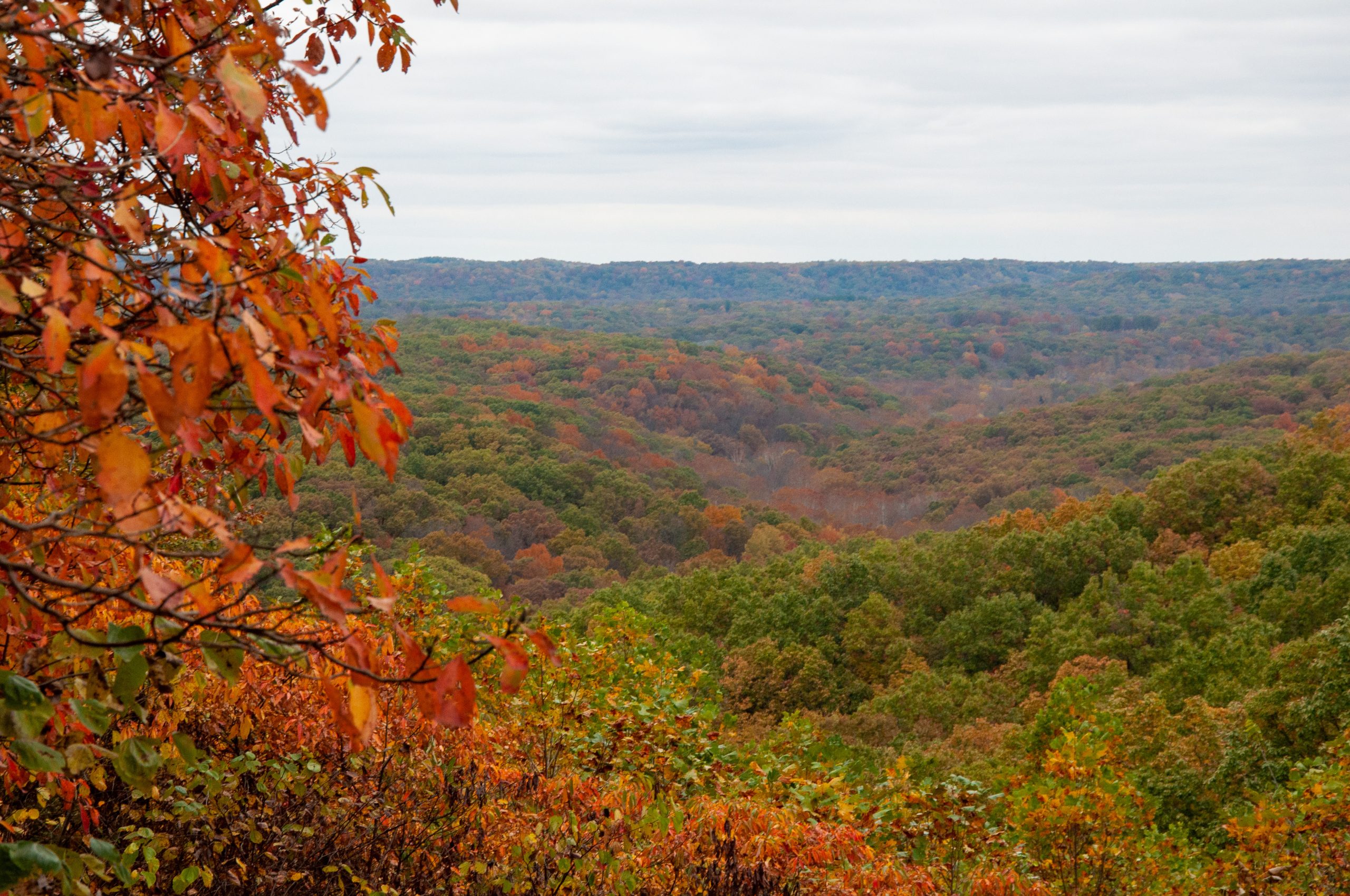
Brown County is beloved for its vistas of iconic Southern Indiana hills. Now the forests under protection in the county include another 89 acres. That’s all thanks to our members’ generosity!
Betley Woods,Blossom Hollow,Callon Hollow,Homepage,Newsroom,Properties
December 9, 2025
Board member Ryan C. Fuhrmann, CFA, is President and founder of Fuhrmann Capital LLC, an Indiana-based investment management firm. As our incoming board chair, Ryan brings a strong desire to preserve natural habitats for wildlife. We asked him to share his perspective on making gifts of stock to the [...]
Newsroom
