
Land trust strategy goes national
Written By: Shawndra Miller
Date Published: December 31, 2012
Shawndra Miller
Degrees in geology and careers at a six-employee conservation group would seem like far-fetched ways for Heather Bacher and Cliff Chapman to garner national attention.
But a guidebook their organization put together is generating buzz among peers as far away as Alaska and even is working its way into college lesson plans.
Wild hyacinths grow at Indianapolis’ Oliver’s Woods Nature Preserve, owned by the Central Indiana Land Trust.(Photo courtesy of Central Indiana Land Trust)
“At conferences, it’s like she’s a rock star,” Chapman said with a grin as he tipped his head in Bacher’s direction.
The duo work for the Central Indiana Land Trust, a not-for-profit that operates on less than $400,000 a year from the third floor of a turn-of-the-century house at 1500 N. Delaware St.
Bacher, the executive director, started working for the land trust in 2003 as the sole employee.
At the time, the group worked “reactively.”
“The phone would ring and somebody would have a piece of property that they might be interested in protecting,” she said.
“But as our organization grew and matured, we knew that, to better serve the central Indiana region and our mission, we needed to be more thoughtful and proactive and strategic in what we did.”
In 2007, Bacher pitched an idea to her board: Reel in money and develop a strategy that would take a more forward-looking approach to conservation.
She told her board the land trust would continue its original mission of acquiring land and protecting wildlife in central Indiana to guard against future development. As of today, 4,000 acres are under the trust’s protection.
But she wanted to be more aggressive about spreading environmentalism, prodding others to pursue conservation projects the trust can’t handle on its own.
“We are going to manage land that we value and the community values,” she said. “And also, working as a community institution, we will bring our expertise to the rest of the people in this region who affect land use and have a stake and love and care about the land that we do.”
Six donors chipped in $50,000, and an additional $80,000 from a Nina Mason Pulliam Charitable Trust grant kick-started the project. The organization got a second, $200,000 grant in 2011 from the Pulliam trust to keep the project going.
Bacher in early 2008 hired Chapman as conservation director, and the two of them recruited Indianapolis architect Chris Boardman from Ratio Architects to guide the project as a volunteer.
By 2009, the trust released “Greening the Crossroads.”
The 60-page strategy identifies more than 300,000 acres that have conservation potential throughout the 3.1 million acres in Marion County and its eight surrounding counties.
The map highlighting those areas includes many waterways, nearly all of them privately owned, as well as a mass of undeveloped land in Morgan and Johnson counties.
The scope of the plan—covering farmland, wetlands, forests, waterways and cityscapes—is broader than that of similar organizations around the country, said Erin Heskett, national services director for the Washington, D.C.-based Land Trust Alliance.
“What’s cool about the ‘Crossroads’ project [is], it created a vision where there was no vision,” Heskett said.
A separate, 30-page report details how the trust worked with scientists, planners, government officers and other experts to identify the 300,000 acres.
That information helped Kim Sollien of the Great Land Trust in Palmer, Alaska, more than the Indianapolis group’s actual strategy.
Sollien, a project manager for the land trust in southern Alaska, was charged with developing a conservation plan for Matanuska-Susitna Borough, where Palmer is the seat.
“I quickly got on the Internet to figure out who else in the country is doing this,” she said. “It was incredibly helpful to me to read about their process in terms of working with different stakeholder groups to identify these resources. It really helped me paint the picture of what we could do here.”
A third, 30-page report explains how community groups can carry out a gamut of conservation and restoration work.
Land trust representatives travel community to community to present their reports to residents as a way to ignite conversations that might spur them to start their own projects.
It was that kind of community visit that persuaded Tom Johnson and his wife to sell to the trust 109 acres that they owned next to Lamb Lake in southwestern Johnson County.
His father-in-law, Russell Lamb, built the body of water after buying the property and the surrounding land. Johnson, his wife and his brother-in-law had known for years they wanted to keep nature intact, but lacked the financial resources to do so.
In 2008, just months before inheriting the land, Johnson met Chapman and learned about “Greening the Crossroads” and about his property’s wildlife.
Chapman visited the wooded site, which is in the town of Trafalgar. He won over Johnson after he started to play recordings of birds.
“He was able to bring in a couple types of warblers that hadn’t been seen in the state in years,” Johnson said. “That to me, helped seal the deal, that we could preserve that.”
Confident in the land trust’s ability to protect the land, the Johnsons sold the lakefront, wooded property to the organization for $4,000 an acre, well below the assessed value. The trust then set up a nature preserve.
While the land trust will set up preserves on land it owns, as it did in Johnson County, the organization typically doesn’t do the actual conservation work, such as cleaning up waterways. Most of the land “Greening the Crossroads” identifies is privately owned.
In their most hands-on roles, employees serve on committees and advise government offices, private businesses and landowners.
The trust will offer its input on matters as basic as rezoning so that ecology is being considered in local infrastructure projects.
Ashlee Mras, a project manager in Indianapolis’ Office of Sustainability, said the city started thinking greener in 2008 or 2009—coincidentally, around the same time “Greening the Crossroads” published—about environmentally friendly approaches in lieu of traditional, “gray infrastructure,” such as roads and storm drains.
The city office is one of several that has consulted “Greening the Crossroads” for projects like the Reconnecting to Our Waterways initiative to improve the city’s creeks and rivers.
Mras, the city’s liaison for the project, said the initiative decided to remove invasive plants from along Fall Creek, under the land trust’s advisement. That will allow the natural flora to grow there, filtering the water and lowering pollution.
The ability of “Greening the Crossroads” to connect a private land trust with government offices in order to accomplish region-wide goals caught Aaron Thompson’s attention at the University of Wisconsin’s Stevens Point campus.
Thompson, an assistant professor of natural resource planning, learned about the plan when he was working on his doctorate at Purdue University.
The guidelines—with their regional scope and deep community involvement—impressed him enough that he now uses the plan for a unit in his classes.
“I think the nine-county, regional focus was a big part of what’s been successful,” he said. “Planning is usually done at the county or city—municipality—levels.”
Article by: Dan Human. Featured in the IBJ on December 22, 2012. To view the complete article online visit:
http://www.ibj.com/article/shared?userId=25836&key1=AGHvgggukrL%2FI6PeR48spE%2BhHJsrnv55&key2=UaqX%2B1t0DZQ%3D

Ben Valentine
Guest Blogger
Ben Valentine is a founding member of the Friends of Marott Woods Nature Preserve and is active in several other conservation organizations. He leads a series of NUVO interviews with Indiana's environmental leaders, and he cherishes showing his son all the wonders of nature he grew up loving.

DJ Connors
Guest Blogger
DJ Connors, a Central Indiana native and late-to-life hunter, combines a lifelong appreciation for wildlife and the outdoors with a deep passion for exploring the natural beauty of the area he has called home for most of his life. As a husband and father of three, he is committed to ensuring his children have the same opportunities to connect with nature and appreciate the outdoors in their community. DJ’s unique journey into hunting emphasizes sustainability, responsible stewardship, and the importance of preserving these experiences for future generations.

Bridget Walls
Guest Blogger
Bridget is our first ever Communications and Outreach Intern. She is a graduate of Marian University, where she combined English, studio art, and environmental sciences in her degree studies. As treasurer for Just Earth, the university's environmental club, she helped plan events encouraging a responsible relationship between people, nature, and animals.

Jordan England
Guest Blogger
Jordan England is a lifelong Shelby County resident who graduated from Waldron Jr. Sr. High School (just a few miles from Meltzer Woods!). After earning her B.S. degree in Retail Management from Purdue University, she returned to Waldron to start a family with her husband, Brian. Together they have 3 young children and enjoy sharing with them their love of the community. Jordan is the Grants and Nonprofit Relations Director at Blue River Community Foundation, managing BRCF’s grant program, providing support to local nonprofits, and promoting catalytic philanthropy in Shelby County.

Cliff Chapman
President and CEO
As CILTI’s President and CEO, Cliff keeps CILTI’s focus on good science and stewardship. He’s mindful that the natural places you love took thousands of years to evolve and could be destroyed in a single day, and that knowledge drives his dedication to their protection.
Stacy Cachules
Chief Operating Officer
Among her many key duties as Assistant Director, Stacy has the critical task of tracking our budget, making sure we channel donations for maximum efficiency. When her workday’s done, Stacy loves to spend time with her two young boys—and when not traveling, she’s likely planning the next travel adventure.

Ryan Fuhrmann
Board Chair
Ryan C. Fuhrmann, CFA, is President and founder of Fuhrmann Capital LLC, an Indiana-based investment management firm focused on portfolio management. Ryan’s interest in land conservation centers around a desire to help preserve natural habitats for wildlife and the subsequent benefits it brings to people and the environment.

Joanna Nixon
Board Member
Joanna Nixon is the owner of Nixon Consulting, an Indianapolis-based strategy and project management firm focused on the nonprofit sector. She currently serves as the Philanthropic Advisor for the Efroymson Family Fund. Prior to opening her consulting practice in 2000, Joanna was vice-president for grantmaking at Central Indiana Community Foundation (CICF). Joanna has more than 25 years of experience in the nonprofit and arts and culture sector. She is passionate about the environment and loves bringing big ideas to life and creating high-quality arts and culture programs and experiences. Joanna enjoys outdoor adventures, including competing in fitness obstacle course races and hiking with her high energy Australian Cattle Dog, Jackson.

Karen Wade
Board Member
Before retiring, CILTI board member Karen Wade worked for Eli Lilly & Co. In retirement she volunteers for a number of organizations, including the Indiana Master Naturalist program, Johnson County Native Plant Partnership CISMA, Meadowstone Therapeutic Riding Center, and Leadership Johnson County.

David Barickman
Development Director
Born and raised in Central Illinois, David spent many days as a child wandering around the river, forest and lakes there. He works behind the scenes as a key member of our fundraising team. When not working, David loves to be outdoors hiking, fly fishing, kayaking or woodworking.

Jamison Hutchins
Stewardship Director
Jamison leads our stewardship team in caring for the land that is so important to you. He comes to our team after eight years as Bicycle and Pedestrian Coordinator for the city of Indianapolis, where his work had a positive impact from both health and environmental perspectives.

Jen Schmits Thomas
Media Relations
An award-winning communicator and recognized leader in Central Indiana’s public relations community, Jen helps us tell our story in the media. She is the founder of JTPR, which she and her husband John Thomas own together. She is accredited in public relations (APR) from the Public Relations Society of America, and loves to camp and hike in perfect weather conditions.

Shawndra Miller
Communications Director
Shawndra’s earliest writing projects centered around the natural world, starting when a bird inspired her to write her first “book” in elementary school. Now she is in charge of sharing our story and connecting you to our work. Through our print and online materials, she hopes to inspire your participation in protecting special places for future generations.

Phillip Weldy
Stewardship Manager
Phillip enjoys nature’s wonders from an up-close-and-personal perspective as he works to restore the natural places you love. As an AmeriCorps member in Asheville, NC, he had his first full immersion in relatively undisturbed land while reconstructing wilderness trails in National Parks and National Forests.









December 11, 2025
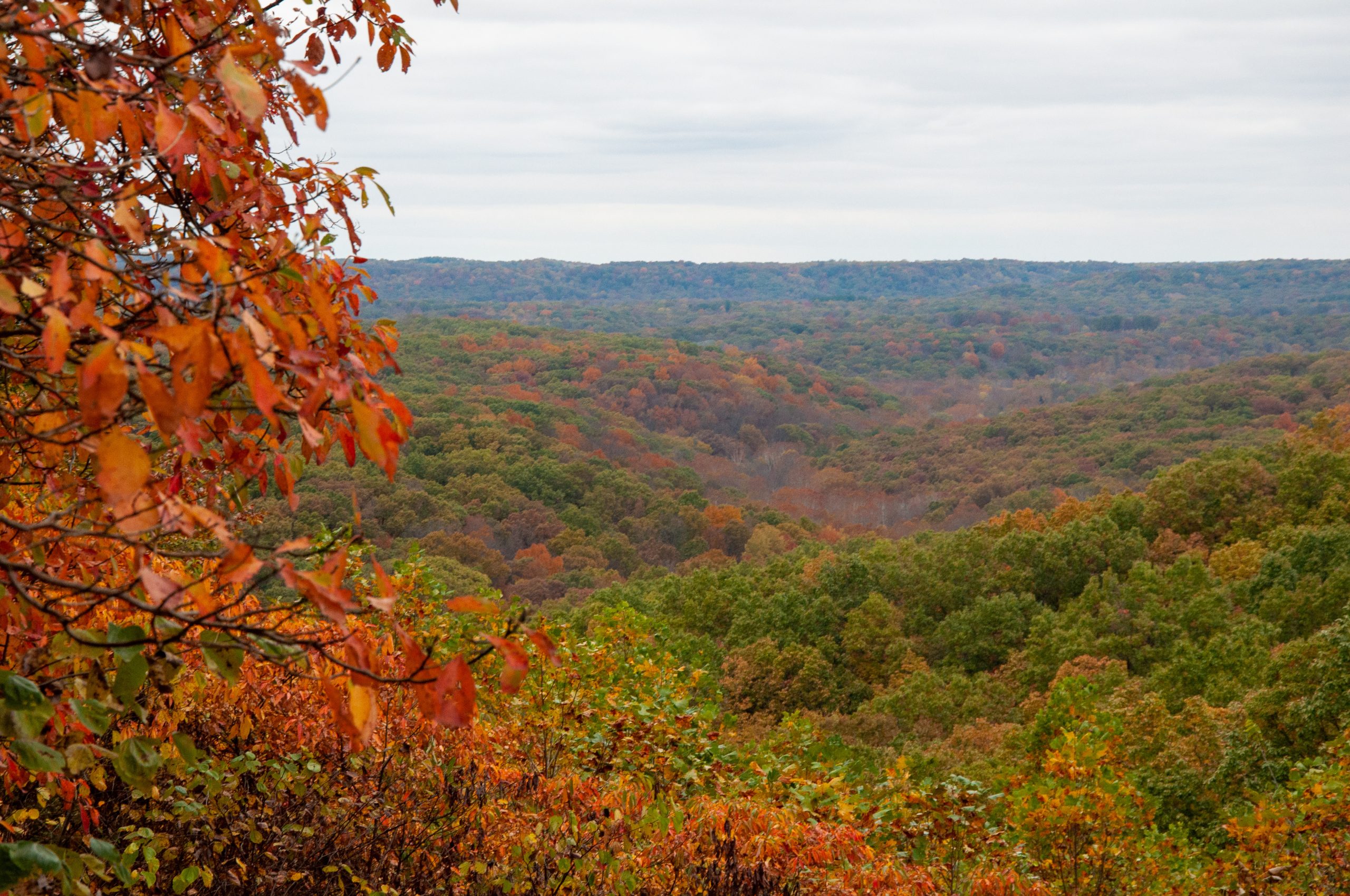
Brown County is beloved for its vistas of iconic Southern Indiana hills. Now the forests under protection in the county include another 89 acres. That’s all thanks to our members’ generosity!
Betley Woods,Blossom Hollow,Callon Hollow,Homepage,Newsroom,Properties
December 9, 2025
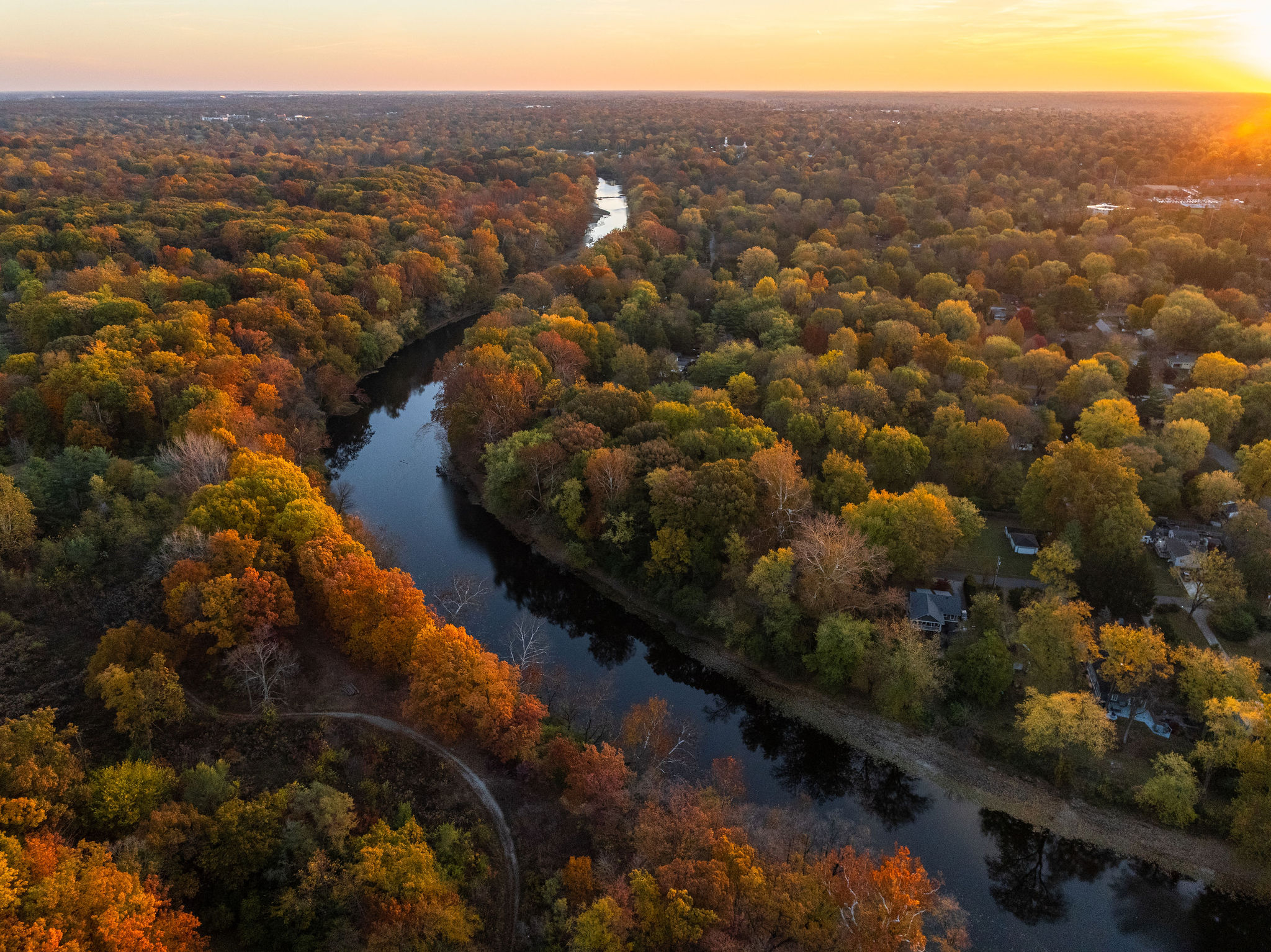
Board member Ryan C. Fuhrmann, CFA, is President and founder of Fuhrmann Capital LLC, an Indiana-based investment management firm. As our incoming board chair, Ryan brings a strong desire to preserve natural habitats for wildlife. We asked him to share his perspective on making gifts of stock to the [...]
Newsroom
December 2, 2025
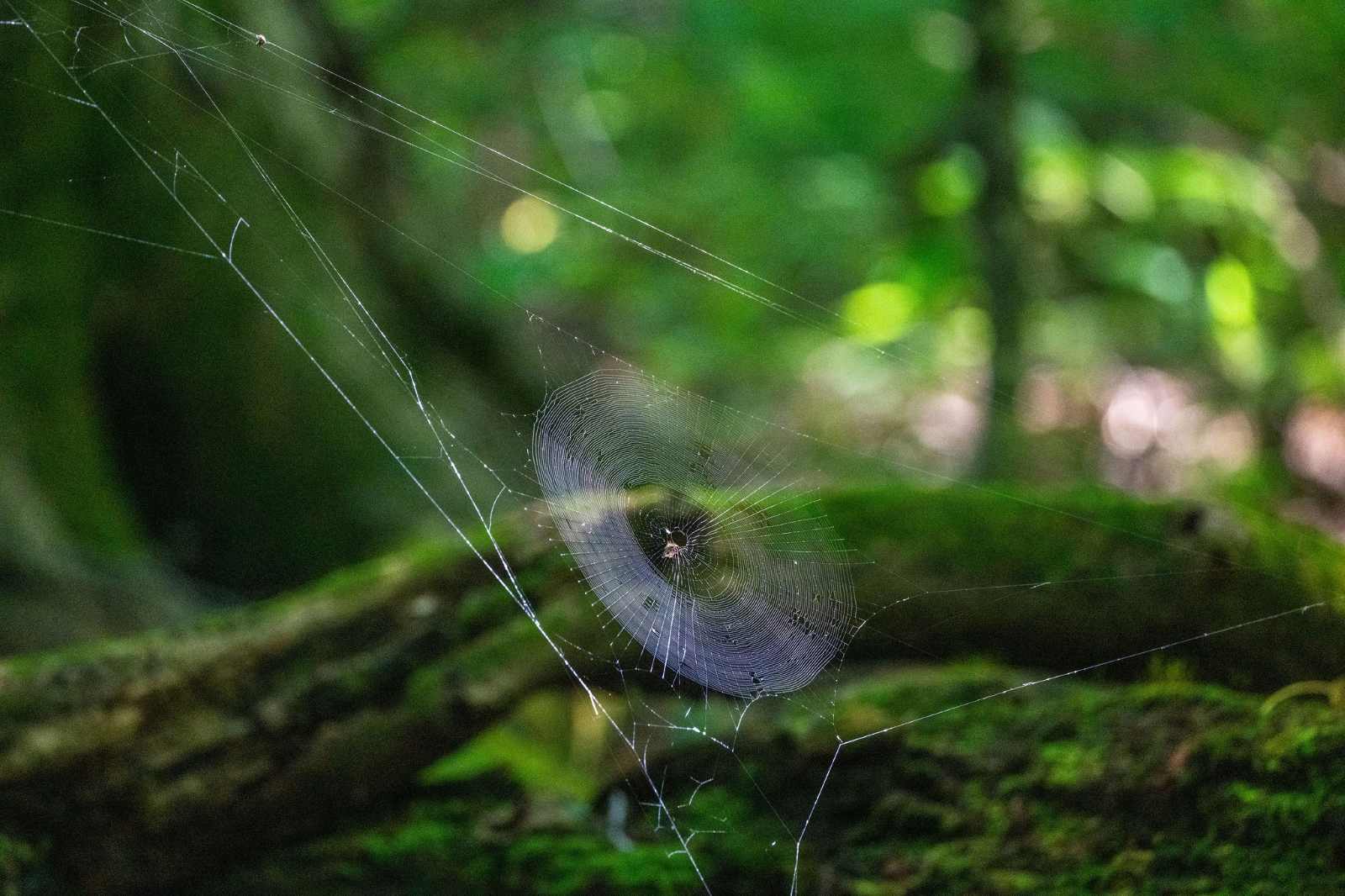
Our board member, John Bacone, reflects on conserving key natural areas. He led the Department of Natural Resources Division of Nature Preserves for over four decades. Years ago, when I was working in the Indiana DNR Division of Nature Preserves (DNP), I asked Bob Waltz, the State Entomologist, how [...]
Betley Woods,Blossom Hollow,Homepage,Meltzer Woods,Newsroom,Properties,Stewardship
