
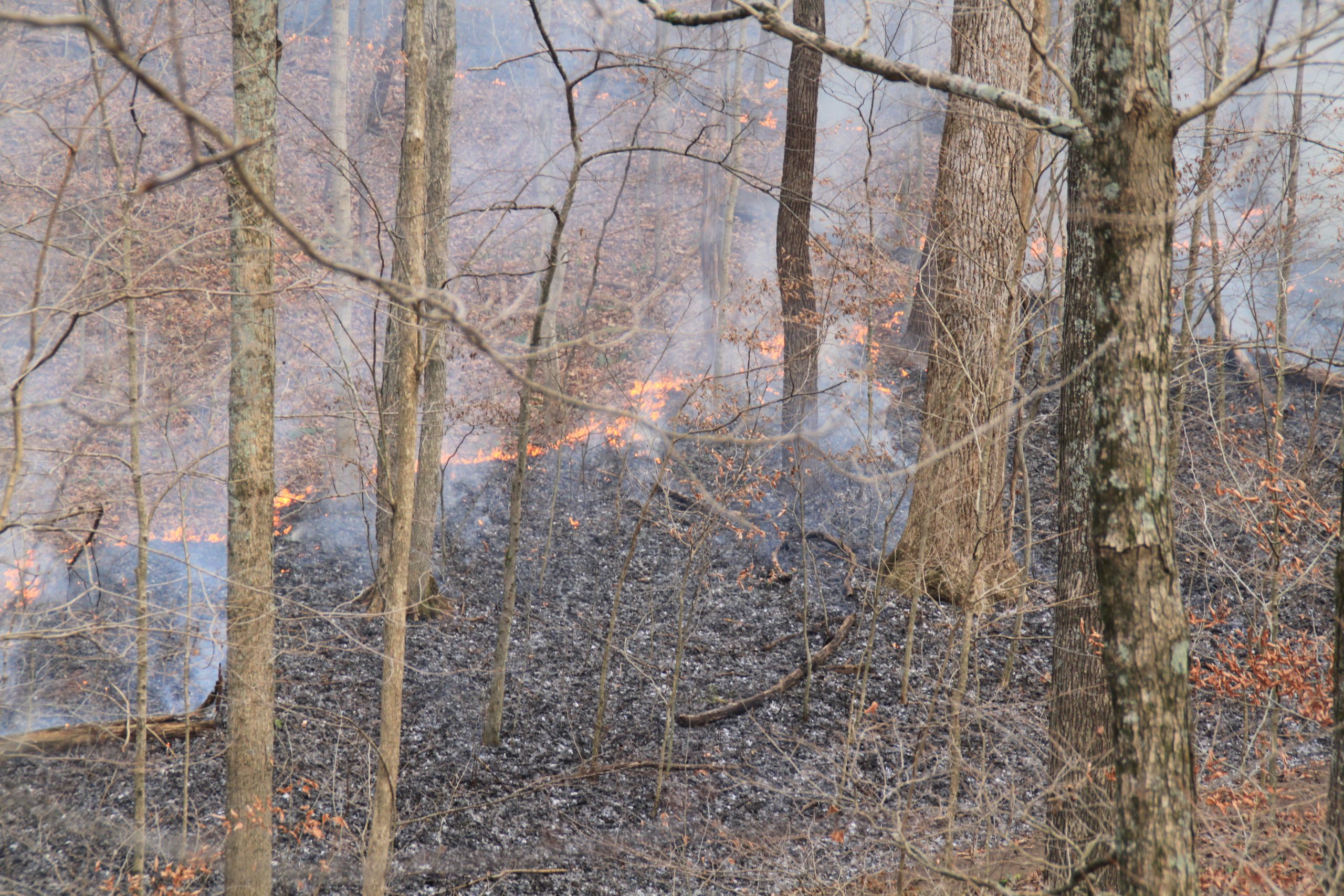
2020 Nov Blossom Burn TYW 14
Prescribed burn at the Laura Hare Preserve at Blossom Hollow, November 2020
Planning a Prescribed Burn: Safety, Science, and Stewardship
Written By: Robert McCrea
Date Published: June 10, 2026
Robert McCrea
The conservation community, including land trusts like CILTI, increasingly uses prescribed fire as a key restoration tool. Each prescribed burn is designed to achieve specific objectives. Planning a prescribed burn involves careful consideration of site conditions, safety, and effectiveness.
What goes into deciding how and where to use prescribed burns? The first two factors are binary yes/no questions: Is the plant community fire-adapted, and can a burn be conducted safely? Our team only conducts burns at nature preserves where the plant community is already fire-adapted, such as oak forests and grassland/pollinator habitats. We first determine whether prescribed fire will benefit the health of the plant community. In sites that are not fire-adapted, such as wet mesic forests, fire is not an appropriate tool.
Next we look at safety considerations. How difficult or easy is it to move across the terrain? Are fire breaks present? If the proposed burn is not in a fire adapted plant community and/or can’t be completed safely, it’s a clear “no.”
The third factor in site selection concerns the onsite conditions that make a site appropriate for burning. Things like the composition of leaf litter, slope exposure, and presence of a seed crop all play a huge role in the efficacy of prescribed burning.
Leaf litter (called “fuel” in the burn plan) makes a more effective fire if it is primarily composed of oak leaves. Oaks are adapted to fire, and when oak leaves fall, they tend to curl up, allowing them to burn more easily than flatter-lying, moister maple leaves.
Generally, if oak regeneration is an objective, south- and west-facing slopes are better sited to allow that. Direct sunlight can filter through a thinned overstory better than a north facing slope, allowing for greater oak regeneration.
The seed crop may look like acorns from nearby oak trees, but it may also include native plants of a much smaller size than trees. A study on use of fire at the Laura Hare Preserve at Blossom Hollow found an increase in sedges after the first burn. A diverse understory means a healthier forest.
Finally, the team evaluates whether there is a clear management objective that can be realized through burning. For prescribed burns intended to increase oak forest health, objectives typically include decreasing both leaf litter and the density of the midlevel canopy to aid in oak seedling germination. Prescribed fire also helps in the control of woody invasives. These are all clear objectives that warrant a prescribed burn. It’s worth noting that the more invasives are controlled with fire, the less herbicide needs to be applied.
Once a site is determined, it’s time to prepare a prescribed burn plan. The prescribed burn plan is a detailed written document that outlines how to safely and effectively complete the prescribed burn. It documents things like location and structure of fire breaks, weather conditions that must be present in order to start the prescribed burn, the number of trained people needed to conduct the prescribed burn, and the tools needed. Maps of prescribed burn units are also critical.
The final planning step is to obtain an open burning permit through Indiana Department of Environmental Management (IDEM). Indiana law and regulations prohibit certain types of open burning unless you have a permit issued by IDEM. With a prescribed burn plan complete, the team applies for this open burning permit.
The main intent behind requiring a permit is to monitor for impacts to air quality. But permitting also has a major safety impact: Each landowner adjacent to the property where the prescribed burn takes place gets notice of the upcoming prescribed burn when the permit is issued.
The day of the prescribed burn, every aspect of the plan must be followed. That includes factors like required weather conditions and location of fire breaks. Prior to and on the day of each prescribed burn, the team reviews the plan to make sure its requirements are satisfied.
The primary factor on a potential burn day is the weather. All the requirements are included in the plan, but the primary ones are relative humidity, temperature, and wind direction. If any of these are outside of the determined prescription, there won’t be a burn that day.
Additionally, CILTI places limits on the burn season, going beyond state requirements in order to minimize wildlife impacts. The potential season can only begin when brumating animals like box turtles and snakes are dormant underground. Brumation is the reptile equivalent to hibernation. When these animals emerge, fire season for CILTI is over.
Our stewardship crew currently uses the services of trained prescribed fire practitioners to complete prescribed burns. Many times, CILTI’s stewardship team members assist as they build towards conducting burns in-house. Certification requires a combination of classes and burn experience led by certified burn crews. Our team is well on the way to this after years of helping partners with prescribed burns throughout the state.
Fire is an important tool in the restoration toolbox that can be used to accomplish multiple goals like oak regeneration and invasive control simultaneously. It will never be the only tool, but when used correctly, it can help redirect stewardship time and effort to other preserves that cannot or should not be managed with fire.

Ben Valentine
Guest Blogger
Ben Valentine is a founding member of the Friends of Marott Woods Nature Preserve and is active in several other conservation organizations. He leads a series of NUVO interviews with Indiana's environmental leaders, and he cherishes showing his son all the wonders of nature he grew up loving.

DJ Connors
Guest Blogger
DJ Connors, a Central Indiana native and late-to-life hunter, combines a lifelong appreciation for wildlife and the outdoors with a deep passion for exploring the natural beauty of the area he has called home for most of his life. As a husband and father of three, he is committed to ensuring his children have the same opportunities to connect with nature and appreciate the outdoors in their community. DJ’s unique journey into hunting emphasizes sustainability, responsible stewardship, and the importance of preserving these experiences for future generations.

Bridget Walls
Guest Blogger
Bridget is our first ever Communications and Outreach Intern. She is a graduate of Marian University, where she combined English, studio art, and environmental sciences in her degree studies. As treasurer for Just Earth, the university's environmental club, she helped plan events encouraging a responsible relationship between people, nature, and animals.

Jordan England
Guest Blogger
Jordan England is a lifelong Shelby County resident who graduated from Waldron Jr. Sr. High School (just a few miles from Meltzer Woods!). After earning her B.S. degree in Retail Management from Purdue University, she returned to Waldron to start a family with her husband, Brian. Together they have 3 young children and enjoy sharing with them their love of the community. Jordan is the Grants and Nonprofit Relations Director at Blue River Community Foundation, managing BRCF’s grant program, providing support to local nonprofits, and promoting catalytic philanthropy in Shelby County.

Cliff Chapman
President and CEO
As CILTI’s President and CEO, Cliff keeps CILTI’s focus on good science and stewardship. He’s mindful that the natural places you love took thousands of years to evolve and could be destroyed in a single day, and that knowledge drives his dedication to their protection.

Ryan Fuhrmann
Board Chair
Ryan C. Fuhrmann, CFA, is President and founder of Fuhrmann Capital LLC, an Indiana-based investment management firm focused on portfolio management. Ryan’s interest in land conservation centers around a desire to help preserve natural habitats for wildlife and the subsequent benefits it brings to people and the environment.

Joanna Nixon
Board Member
Joanna Nixon is the owner of Nixon Consulting, an Indianapolis-based strategy and project management firm focused on the nonprofit sector. She currently serves as the Philanthropic Advisor for the Efroymson Family Fund. Prior to opening her consulting practice in 2000, Joanna was vice-president for grantmaking at Central Indiana Community Foundation (CICF). Joanna has more than 25 years of experience in the nonprofit and arts and culture sector. She is passionate about the environment and loves bringing big ideas to life and creating high-quality arts and culture programs and experiences. Joanna enjoys outdoor adventures, including competing in fitness obstacle course races and hiking with her high energy Australian Cattle Dog, Jackson.

Karen Wade
Board Member
Before retiring, CILTI board member Karen Wade worked for Eli Lilly & Co. In retirement she volunteers for a number of organizations, including the Indiana Master Naturalist program, Johnson County Native Plant Partnership CISMA, Meadowstone Therapeutic Riding Center, and Leadership Johnson County.

David Barickman
Development Director
Born and raised in Central Illinois, David spent many days as a child wandering around the river, forest and lakes there. He works behind the scenes as a key member of our fundraising team. When not working, David loves to be outdoors hiking, fly fishing, kayaking or woodworking.

Jamison Hutchins
Stewardship Director
Jamison leads our stewardship team in caring for the land that is so important to you. He comes to our team after eight years as Bicycle and Pedestrian Coordinator for the city of Indianapolis, where his work had a positive impact from both health and environmental perspectives.

Robert McCrea
Land Protection Director
Robert grew up in Bloomington, IN, where he opted for exploring the hills of southern Indiana rather than the expected high school extracurricular pursuits. This formative time set the tone for his career in conservation. Most recently, Robert was an attorney at Conservation Law Center and provided counsel to land trusts and conservation partnerships throughout Indiana. As CILTI's Land Protection Director, he works to protect Central Indiana’s remaining natural areas.

Jen Schmits Thomas
Media Relations
An award-winning communicator and recognized leader in Central Indiana’s public relations community, Jen helps us tell our story in the media. She is the founder of JTPR, which she and her husband John Thomas own together. She is accredited in public relations (APR) from the Public Relations Society of America, and loves to camp and hike in perfect weather conditions.

Shawndra Miller
Communications Director
Shawndra’s earliest writing projects centered around the natural world, starting when a bird inspired her to write her first “book” in elementary school. Now she is in charge of sharing our story and connecting you to our work. Through our print and online materials, she hopes to inspire your participation in protecting special places for future generations.

Phillip Weldy
Stewardship Manager
Phillip enjoys nature’s wonders from an up-close-and-personal perspective as he works to restore the natural places you love. As an AmeriCorps member in Asheville, NC, he had his first full immersion in relatively undisturbed land while reconstructing wilderness trails in National Parks and National Forests.









December 11, 2025
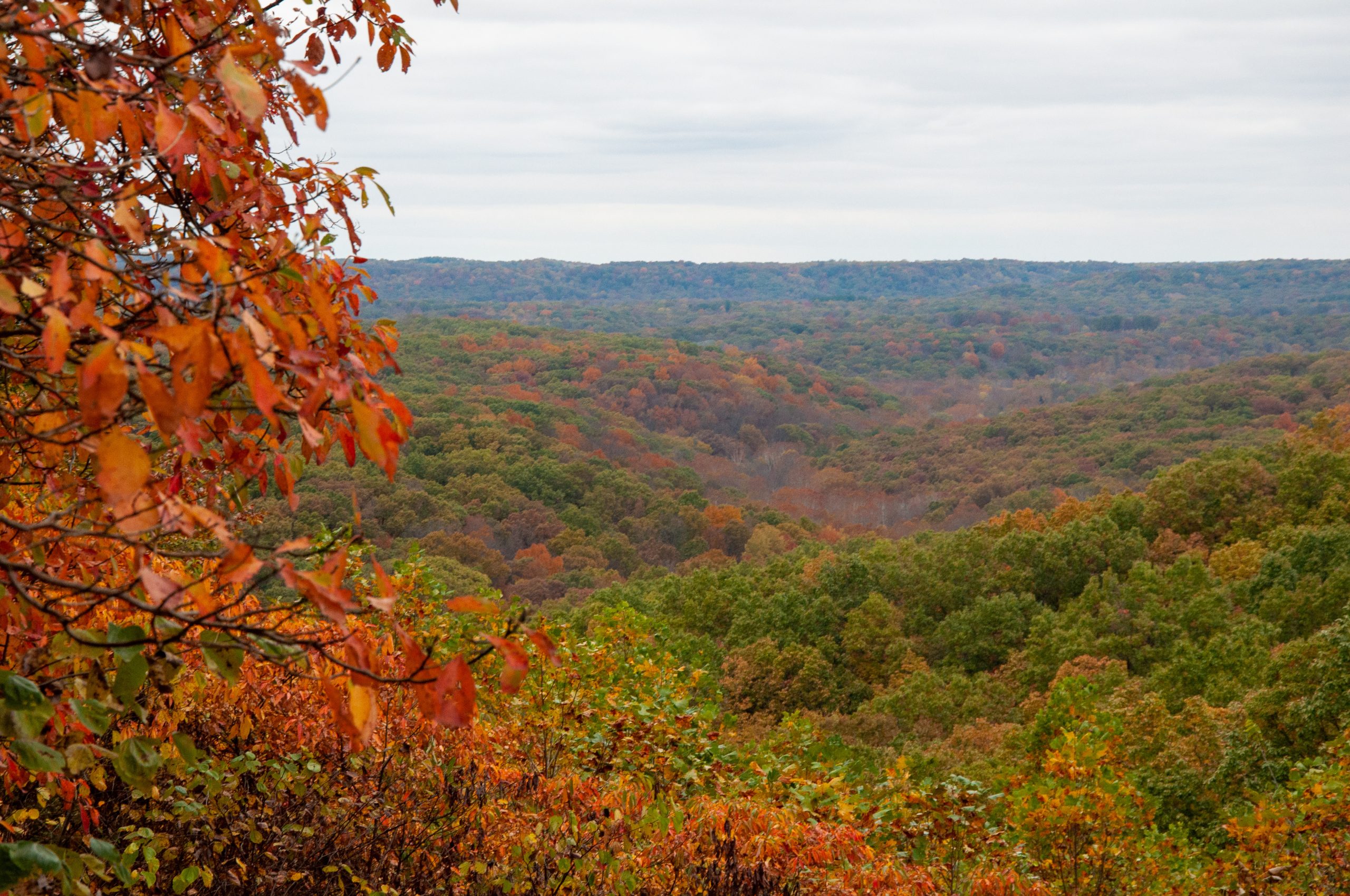
Brown County is beloved for its vistas of iconic Southern Indiana hills. Now the forests under protection in the county include another 89 acres. That’s all thanks to our members’ generosity!
Betley Woods,Blossom Hollow,Callon Hollow,Homepage,Newsroom,Properties
December 9, 2025
Board member Ryan C. Fuhrmann, CFA, is President and founder of Fuhrmann Capital LLC, an Indiana-based investment management firm. As our incoming board chair, Ryan brings a strong desire to preserve natural habitats for wildlife. We asked him to share his perspective on making gifts of stock to the [...]
Newsroom
December 2, 2025
Our board member, John Bacone, reflects on conserving key natural areas. He led the Department of Natural Resources Division of Nature Preserves for over four decades. Years ago, when I was working in the Indiana DNR Division of Nature Preserves (DNP), I asked Bob Waltz, the State Entomologist, how [...]
Betley Woods,Blossom Hollow,Homepage,Meltzer Woods,Newsroom,Properties,Stewardship
