
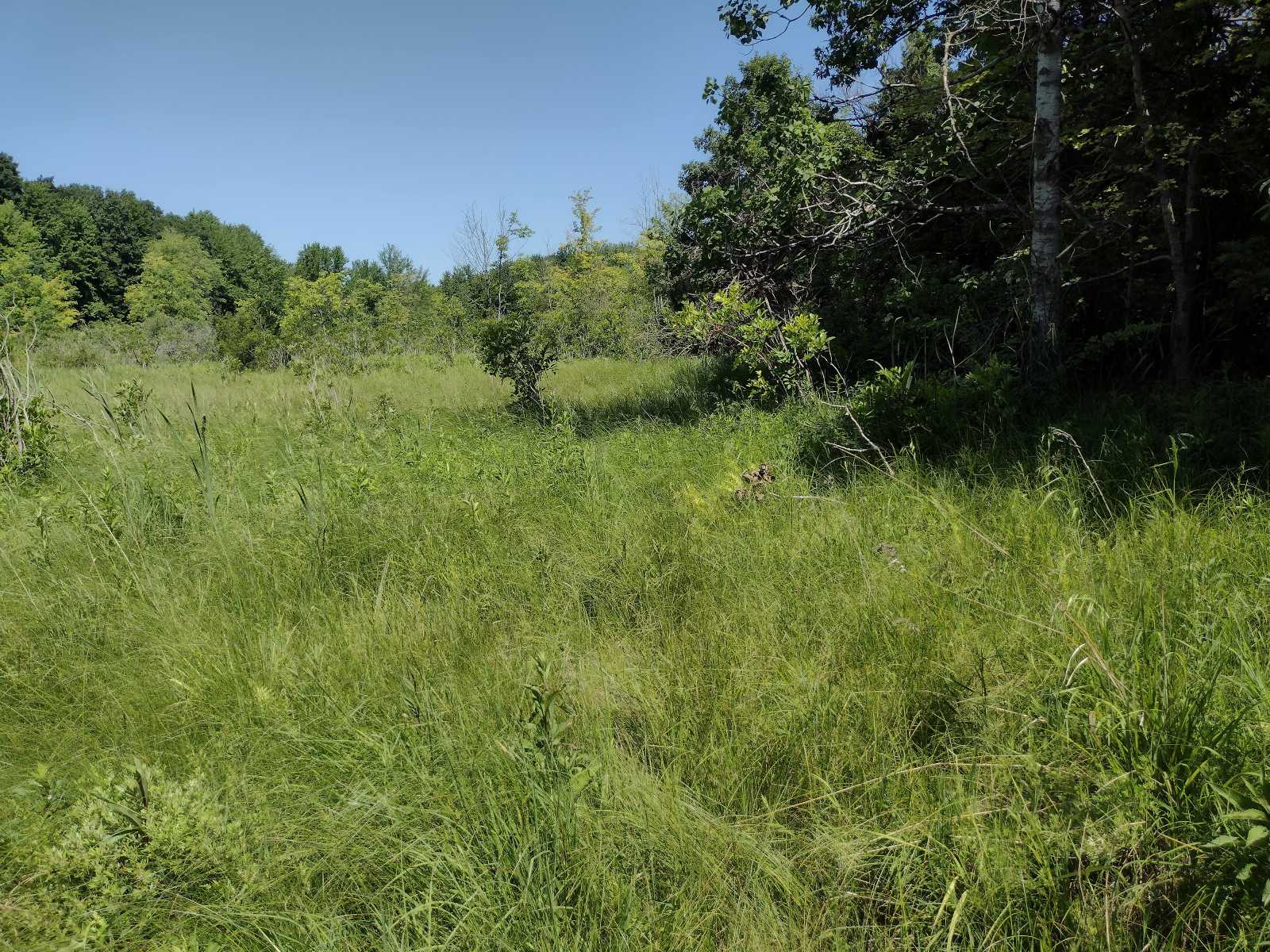
Photo by John Brittenham 2
Fen Photo by John Brittenham
The Butterfly Effect: A tale of two fens
Written By: Shawndra Miller
Date Published: May 7, 2026
Shawndra Miller
Adapted from our spring 2026 newsmagazine
The wingbeats of a small brown butterfly have long reverberated through Indiana’s conservation community. A full ten years before anyone even dreamed of the Central Indiana Land Trust, our forerunners found one of the world’s rarest butterflies in northern Indiana.
It’s a story that ended up being included in Butterflies of Indiana, Ernest Shull’s authoritative 1987 guidebook. It also demonstrates how our work builds on ecologists’ decades-long research into Indiana’s most precious natural areas. We truly stand on the shoulders of dedicated conservationists—many of whom still advise and guide us today.
CILTI member Lee Casebere, then Assistant Director of the Indiana DNR Division of Nature Preserves, recalls the moment. He and Jim Aldrich were doing natural inventory work in a “boggy/fenny site.” Jim was an ecologist with the DNR’s Indiana Natural Heritage Program at the time.
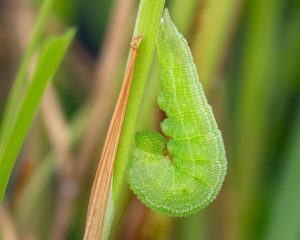
Mitchell’s satyr caterpillar
It was a humid summer day, and their task was to document rare plants. Focused as he was on the unique plant community, Lee took notice when a little brown butterfly flitted by at about knee level.
“I wonder if that’s a Mitchell’s satyr?” he mused aloud.
Jim asked, “What’s a Mitchell’s satyr?”
“To which I proceeded to tell him that it was a rare butterfly not known in very many places, anywhere in the country,” Lee recounts. He told Jim that an Ohio farmer named Homer Price had found them at that very site in the 1950s.
Lee remembers, “That’s all it took for Jim to go chasing after the butterfly to try and catch it! Without a butterfly net!” Since the men were there to inventory plants, they didn’t have insect-collecting materials with them.
But Jim managed to catch the butterfly. Back in Indianapolis, the duo concluded the butterfly had to be a Neonympha mitchellii, an ID later confirmed by lepidoptera authority Ernest Shull. When his book came out, Shull included a line about Lee giving him a mitchellii that had been collected on 11 July 1980. He also documented Homer Price’s specimens found in 1956 in the same bog.
A few years later Ellen Jacquart, one of CILTI’s founders, would be with Jim when the butterfly emerged at another northern Indiana fen. Ellen interned for the Division of Nature Preserves from November 1986 to July 1987. Late in her time there, Jim invited her to accompany him to a LaPorte County wetland for inventory work.
“When we got there,” Ellen recalls, “we put on muck boots, Jim got out his metal clipboard to take notes, and we started heading across a wetland that had lots and lots of tussock sedge. We were hopping across the wetland from one tussock to another.”
Following Jim through the fen, Ellen’s chief focus was keeping water from overtopping her boots. But as it happened, a small brownish butterfly—for whom tussock sedge is a key host plant—was flying that very day.
“After about a half hour,” she remembers, “Jim yelled, ‘Oh!’ and lunged for the ground in one smooth movement.” The butterfly he caught that day would also be confirmed as a Mitchell’s satyr.
Ellen went on to lead the group that started CILTI in 1990. Now the vice chair of our board of directors, she is helping guide our efforts to save more land around the original northern Indiana site. Lee’s input has been crucial as well.
It’s work made all the more urgent by the fact that there is no longer a fen where the second satyr was found. According to Lee, invasive plants overran the privately held LaPorte County property, and eventually the plant community shifted away from conservative fen species to those common to drier habitats.
For land that had likely been a wetland for millennia—possibly hosting the Mitchell’s satyr for the entire time—it was a radical change. One that spelled the end of the fine-leaved sedges that are the main foodsource for Mitchell’s satyr caterpillars.
Habitats can degrade beyond recognition. That is always a possibility. But with your help, the multi-generational project of protecting a key wetland complex continues. Our team is buffering and expanding the protected area, with a goal of nurturing the “boggy/fenny site” back to what it would have looked like in 1980 (and earlier).
We are so grateful for our forebears and their seminal work, which still informs our conservation priorities today. And for your generosity, which enables us to protect remaining habitats for rare species like the critically endangered Mitchell’s satyr. Because of this joint effort, this dwindling species may yet take wing in Indiana. To help us save even more habitat, give today.
Note: Best practices around lepidoptera identification have evolved in the years since those 1980s sightings. Instead of collecting specimens, visual identification in the field is increasingly the norm. Our team uses “satyr sticks” to lightly brush the vegetation and stir insects into flight. No specimens are captured. Instead, identification is based on a combination of physical characteristics, like color pattern and size, coupled with flight behavior.

Ben Valentine
Guest Blogger
Ben Valentine is a founding member of the Friends of Marott Woods Nature Preserve and is active in several other conservation organizations. He leads a series of NUVO interviews with Indiana's environmental leaders, and he cherishes showing his son all the wonders of nature he grew up loving.

DJ Connors
Guest Blogger
DJ Connors, a Central Indiana native and late-to-life hunter, combines a lifelong appreciation for wildlife and the outdoors with a deep passion for exploring the natural beauty of the area he has called home for most of his life. As a husband and father of three, he is committed to ensuring his children have the same opportunities to connect with nature and appreciate the outdoors in their community. DJ’s unique journey into hunting emphasizes sustainability, responsible stewardship, and the importance of preserving these experiences for future generations.

Bridget Walls
Guest Blogger
Bridget is our first ever Communications and Outreach Intern. She is a graduate of Marian University, where she combined English, studio art, and environmental sciences in her degree studies. As treasurer for Just Earth, the university's environmental club, she helped plan events encouraging a responsible relationship between people, nature, and animals.

Jordan England
Guest Blogger
Jordan England is a lifelong Shelby County resident who graduated from Waldron Jr. Sr. High School (just a few miles from Meltzer Woods!). After earning her B.S. degree in Retail Management from Purdue University, she returned to Waldron to start a family with her husband, Brian. Together they have 3 young children and enjoy sharing with them their love of the community. Jordan is the Grants and Nonprofit Relations Director at Blue River Community Foundation, managing BRCF’s grant program, providing support to local nonprofits, and promoting catalytic philanthropy in Shelby County.

Cliff Chapman
President and CEO
As CILTI’s President and CEO, Cliff keeps CILTI’s focus on good science and stewardship. He’s mindful that the natural places you love took thousands of years to evolve and could be destroyed in a single day, and that knowledge drives his dedication to their protection.

Ryan Fuhrmann
Board Chair
Ryan C. Fuhrmann, CFA, is President and founder of Fuhrmann Capital LLC, an Indiana-based investment management firm focused on portfolio management. Ryan’s interest in land conservation centers around a desire to help preserve natural habitats for wildlife and the subsequent benefits it brings to people and the environment.

Joanna Nixon
Board Member
Joanna Nixon is the owner of Nixon Consulting, an Indianapolis-based strategy and project management firm focused on the nonprofit sector. She currently serves as the Philanthropic Advisor for the Efroymson Family Fund. Prior to opening her consulting practice in 2000, Joanna was vice-president for grantmaking at Central Indiana Community Foundation (CICF). Joanna has more than 25 years of experience in the nonprofit and arts and culture sector. She is passionate about the environment and loves bringing big ideas to life and creating high-quality arts and culture programs and experiences. Joanna enjoys outdoor adventures, including competing in fitness obstacle course races and hiking with her high energy Australian Cattle Dog, Jackson.

Karen Wade
Board Member
Before retiring, CILTI board member Karen Wade worked for Eli Lilly & Co. In retirement she volunteers for a number of organizations, including the Indiana Master Naturalist program, Johnson County Native Plant Partnership CISMA, Meadowstone Therapeutic Riding Center, and Leadership Johnson County.

David Barickman
Development Director
Born and raised in Central Illinois, David spent many days as a child wandering around the river, forest and lakes there. He works behind the scenes as a key member of our fundraising team. When not working, David loves to be outdoors hiking, fly fishing, kayaking or woodworking.

Jamison Hutchins
Stewardship Director
Jamison leads our stewardship team in caring for the land that is so important to you. He comes to our team after eight years as Bicycle and Pedestrian Coordinator for the city of Indianapolis, where his work had a positive impact from both health and environmental perspectives.
Robert McCrea
Land Protection Director
Robert grew up in Bloomington, IN, where he opted for exploring the hills of southern Indiana rather than the expected high school extracurricular pursuits. This formative time set the tone for his career in conservation. Most recently, Robert was an attorney at Conservation Law Center and provided counsel to land trusts and conservation partnerships throughout Indiana. As CILTI's Land Protection Director, he works to protect Central Indiana’s remaining natural areas.

Jen Schmits Thomas
Media Relations
An award-winning communicator and recognized leader in Central Indiana’s public relations community, Jen helps us tell our story in the media. She is the founder of JTPR, which she and her husband John Thomas own together. She is accredited in public relations (APR) from the Public Relations Society of America, and loves to camp and hike in perfect weather conditions.

Shawndra Miller
Communications Director
Shawndra’s earliest writing projects centered around the natural world, starting when a bird inspired her to write her first “book” in elementary school. Now she is in charge of sharing our story and connecting you to our work. Through our print and online materials, she hopes to inspire your participation in protecting special places for future generations.

Phillip Weldy
Stewardship Manager
Phillip enjoys nature’s wonders from an up-close-and-personal perspective as he works to restore the natural places you love. As an AmeriCorps member in Asheville, NC, he had his first full immersion in relatively undisturbed land while reconstructing wilderness trails in National Parks and National Forests.









February 2, 2026
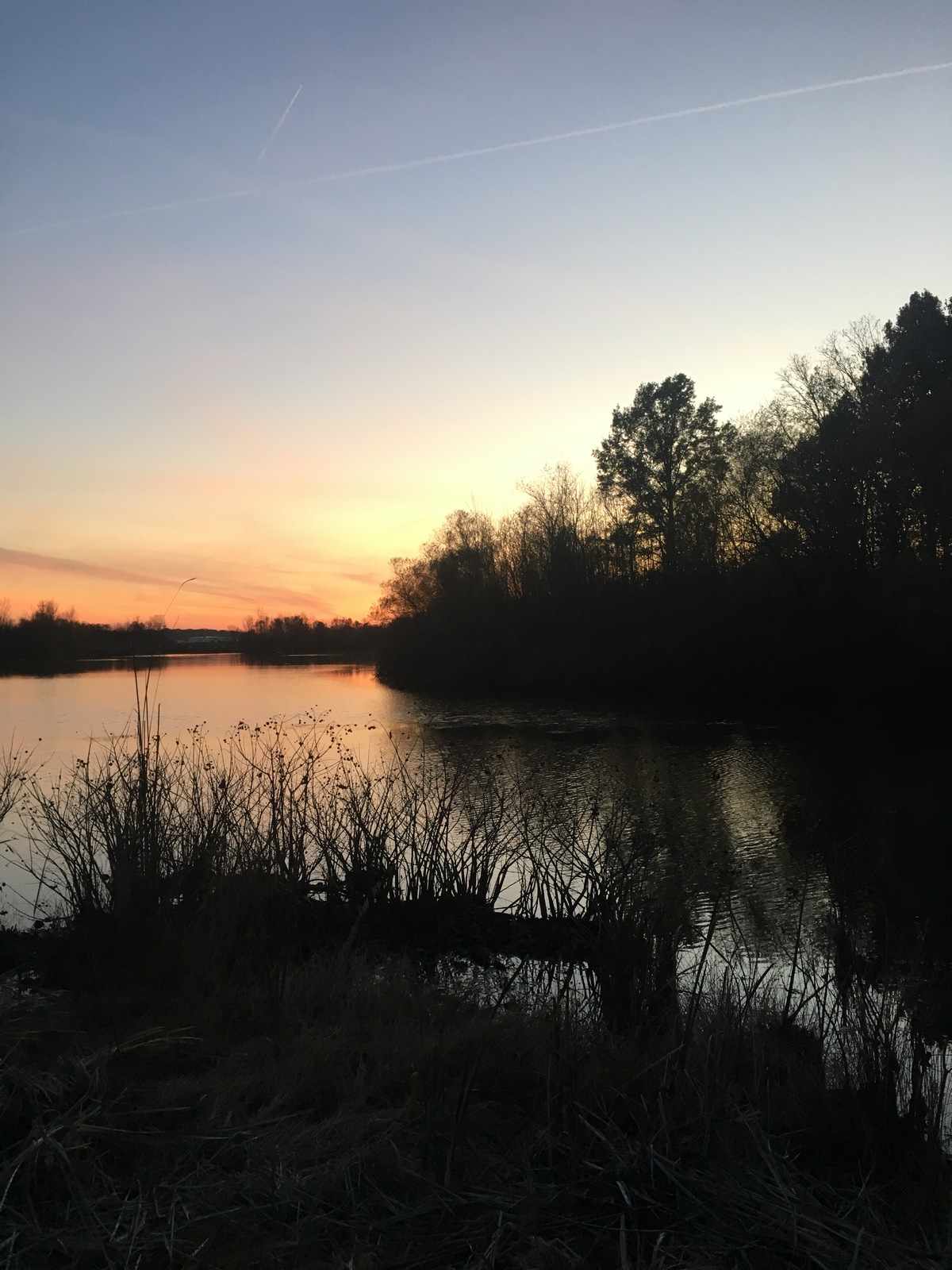
Kidneys of the planet. Biodiversity hotspots. Sponges. These are just some of the ways wetlands can be described, according to Gary Lamberti, Nieuwland Professor of Aquatic Science at the University of Notre Dame.
Browning Marsh,Meltzer Woods,Newsroom,Properties
January 21, 2026
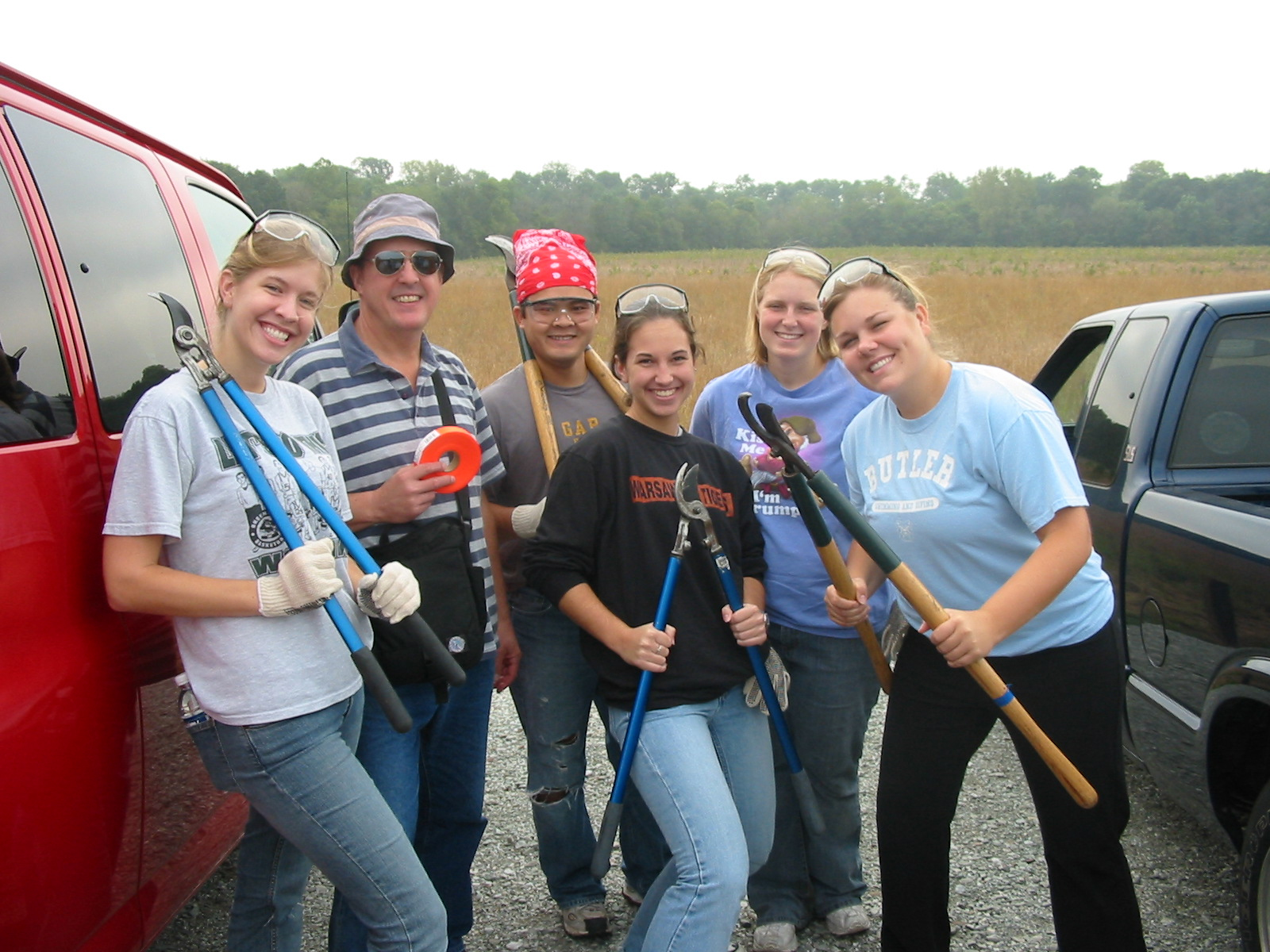
Dick Miller (second from left, above) is a longtime land trust member with a history of rolling up his sleeves. He started off by bringing his Butler students to volunteer events in the late 2000s. After retirement, he volunteered weekly and later joined the board of directors. His beautiful [...]
Legacy,Newsroom

January 8, 2026
We knew at the outset that our goal would require everyone to dig deep. The Efroymson Family Fund offered a generous $350,000 matching challenge, our largest year-end challenge to date. It was a big stretch.
Fred & Dorothy Meyer Nature Preserve,Homepage,Newsroom,Properties
